
What Skipping This Costs You
A garage door that goes untouched for a year doesn't fail quietly. It fails at the worst moment — a frayed cable snaps during an evening rainstorm, a dust-caked track grinds the opener motor until it burns out, or a rusted spring lets go while the door is halfway up. Any of those turns a 20-minute check into a same-day repair call, a replaced opener in the $150–$400 range, or a full spring replacement that's more involved and more expensive than catching the wear early. After a dry, dusty summer and fall, the debris sitting in your tracks and hinges is exactly what winter rain turns into grit paste that accelerates wear. Doing this now, before the rain starts in earnest, is the cheapest insurance you'll buy all year.
Tools You'll Need
- A flashlight or phone light
- A stepladder
- A rag and a small stiff brush (an old toothbrush works)
- Household lubricant made for garage doors (silicone or lithium-based spray, not WD-40 as a long-term lubricant)
- A tape measure
- Work gloves
The 20-Minute Routine
- Look at the door while it moves. Open and close it once and watch the whole cycle. It should move smoothly without jerking, hesitating, or sagging to one side. Any wobble, bounce, or uneven movement is a sign something in the hardware is off — note it, but don't try to adjust it yourself.
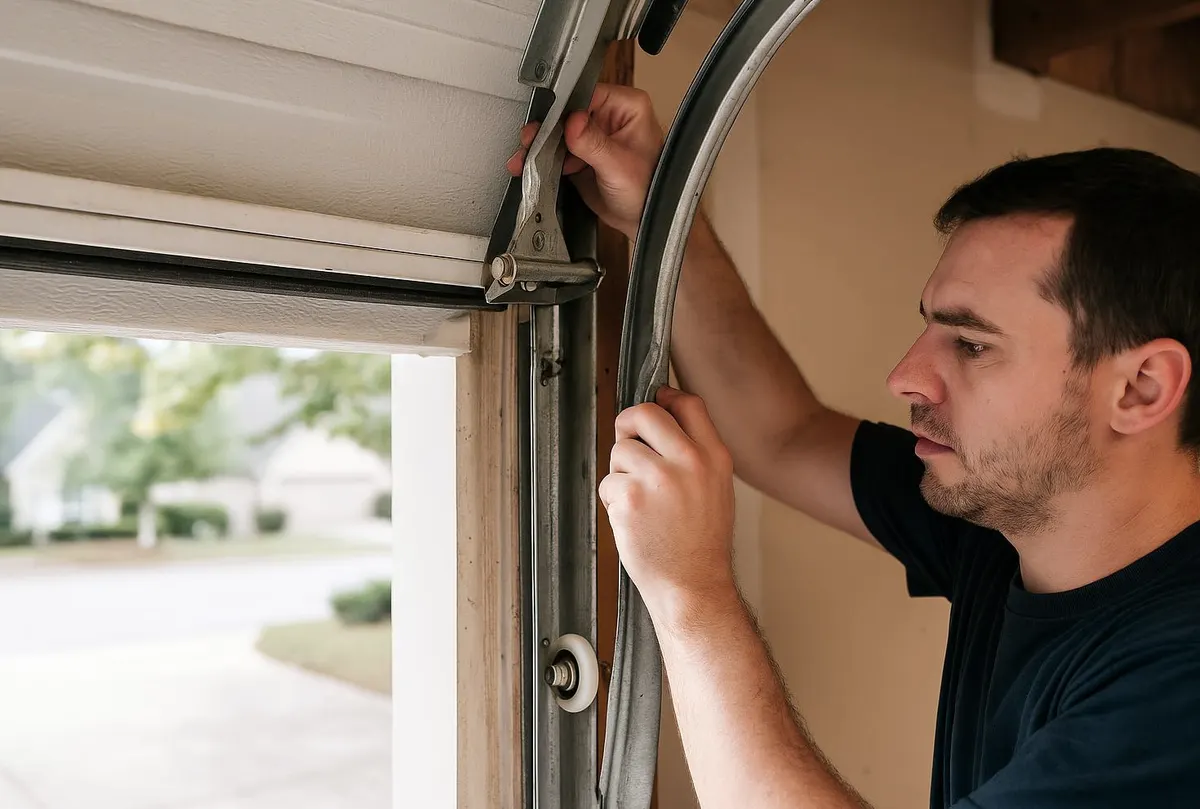
- Wipe down and inspect the tracks. Run your rag along the inside of both tracks to clear dust and dried debris left over from the dry season. While you're at it, check for dents, bends, or gaps where the rollers sit. A track that's pulled away from the wall even slightly needs a technician, not a hammer.
- Check and tighten visible hardware. With the door closed, go bolt by bolt on the brackets holding the track to the frame and the hinges between panels. Vibration from regular use — and from the occasional earthquake tremor that's just part of living here — works these loose over time. A quarter-turn snug is usually enough; don't overtighten.
- Lubricate the moving parts. Spray the hinges, rollers (if they're not sealed/nylon), and the track itself lightly. Wipe off excess so it doesn't attract more dust. Skip the springs and the opener's drive mechanism — those are handled differently and aren't a DIY lubrication job.
- Test the weatherstripping along the bottom and sides. Run your hand along the rubber seal at the base of the door. If it's cracked, flattened, or has gaps letting daylight through, it won't hold up against winter rain and should be replaced before the wet season hits. This one's a straightforward swap most homeowners can do themselves.
- Test the auto-reverse safety feature. Place a roll of paper towels or a 2x4 on the ground where the door closes. Run the door down — it should reverse immediately on contact. If it doesn't, stop using the door until this is fixed. This is a safety issue, not a convenience one.
- Check the balance. With the door disconnected from the opener (pull the manual release cord) and closed, lift it by hand halfway. A properly balanced door will stay put on its own. If it falls or shoots upward, the spring tension is off.
What You Can Handle Yourself
Steps 1 through 6 above are all safe, reasonable homeowner tasks: visual inspection, cleaning, light lubrication, hardware tightening, weatherstripping swaps, and testing the auto-reverse sensor. None of these require touching the spring system or the opener's internal wiring.
What Needs a Technician
If the balance test in step 7 shows the door isn't holding its position, that's a spring tension issue — and garage door springs are under enough force to cause serious injury if handled without the right tools and training. The same goes for anything involving the torsion spring itself, cable replacement, or realigning a track that's pulled away from the wall. If the opener struggles, makes new grinding or clicking noises, or the remote works inconsistently, that's an electrical and mechanical issue worth a proper diagnosis rather than guesswork.
When to Call Azusa Garage Door
If your check turns up a door that won't balance, hardware that's bent rather than just loose, or an opener that's starting to strain, it's time to call in a technician. Azusa Garage Door handles Spring Replacement and Garage Door Maintenance for homeowners across Azusa and nearby areas like Glendora, Covina, and Duarte. We'll do a full tune-up — checking spring tension, track alignment, and opener health — and explain exactly what we find before any work starts, so you're not left guessing what you're paying for.
Twenty minutes now can save you an emergency call later. If anything in your own check felt off, give Azusa Garage Door a call and get it looked at before the winter rain puts it to the test.